
Home › Blog › Korean-style makeup
Best Glass Skin Makeup District 1 Hanoi: Korean Style
By the Vietnam Makeup Artist team · 2026-11-06
Glass skin makeup achieves a smooth, mirror-like complexion using layered primers, lightweight foundations, and strategic highlighting that survive Vietnam's climate. At Cáo MakeUp in District 1 Hanoi, our Korean-style makeup specialists apply color-matched bases for mixed and deeper skin tones, seal the look with humidity-resistant powder and setting spray, and teach clients how to maintain the finish throughout a wedding day or photoshoot. The session typically runs 45–60 minutes; we begin with skincare prep, build in thin, dewy layers, and set everything with techniques proven in 35°C+ heat. A full glass skin makeup session includes a trial beforehand to test undertone match and product longevity. Cost varies by complexity (single makeup vs. group); ask us for a quote on WhatsApp. The most common mistake is applying too much powder—we use a light hand and matte-finish powder only where needed to avoid a cakey look. Book on WhatsApp +84 338 762 340
What makes glass skin makeup different from Western dewy makeup?
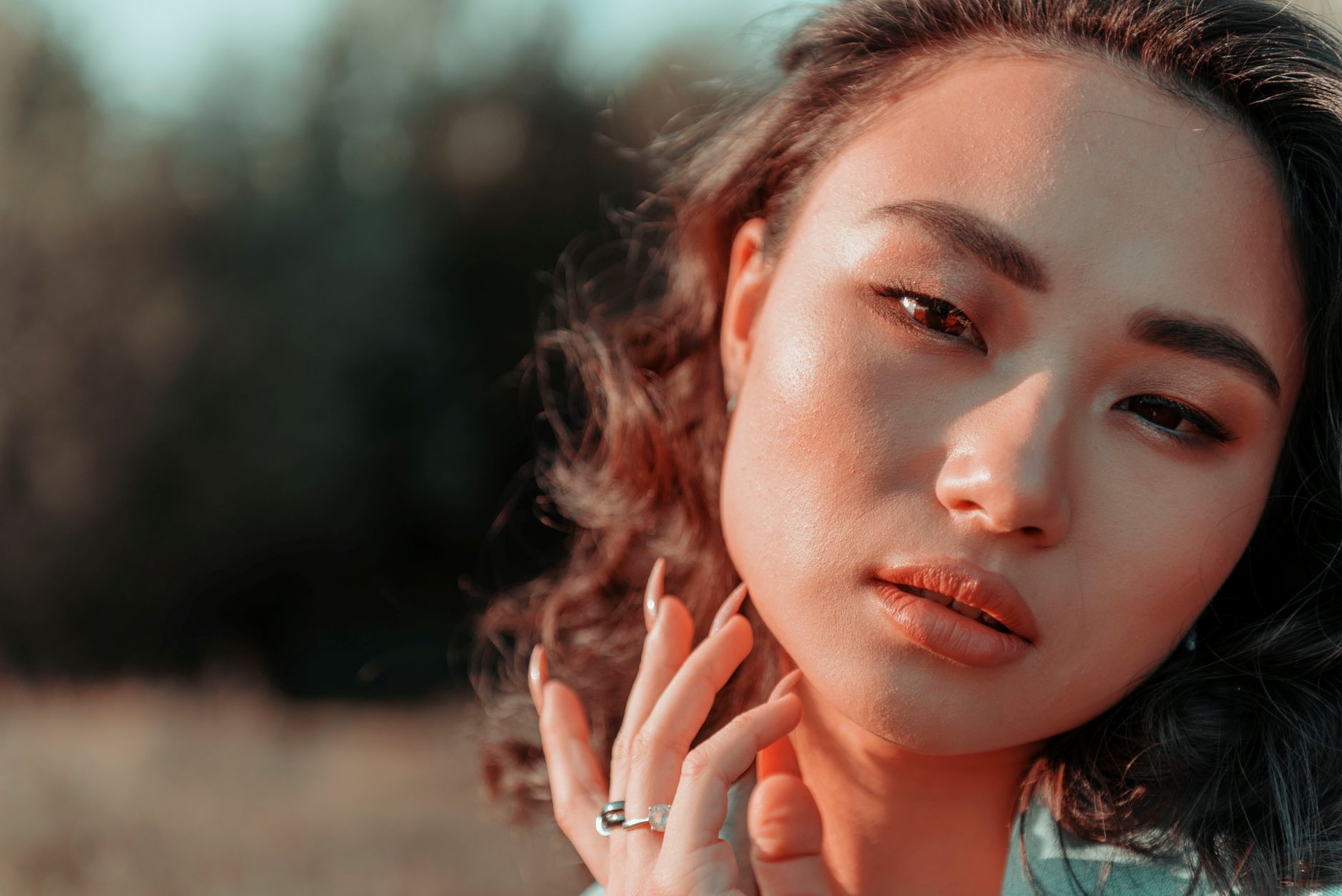
Glass skin is a Korean technique that prioritizes poreless opacity and a wet, reflective finish, not just dewiness. Western dewy makeup often features more visible texture and a natural "glow"; glass skin erases all visible pores and skin texture under good light. We layer a hydrating primer, a thin, high-coverage foundation, and light-reflecting cushion or highlighter in the mid-face, then seal with a flexible setting spray that moves with your skin in humidity. The result photographs as completely smooth—essential for elopement and wedding shoots in Hanoi's muggy season. Glass skin requires more precision in undertone-matching because any mismatch shows starkly on a poreless base; this is why our makeup for every skin type consultation starts with a 10-minute color test using your preferred lighting. You'll see the difference immediately.

How do we match undertones for mixed and deeper skin in glass skin makeup?
Undertone matching is non-negotiable on a poreless base. We test foundation, contour, and concealer on your jawline and inner arm under natural window light—never under studio lights, which distort warm and cool tones. For deeper skin tones, we avoid ashiness by layering a warm undertone primer before foundation, or applying a thin concealer layer that's one shade lighter than skin to lift dark circles without creating a harsh line. Mixed skin often has multiple undertones across the face; we apply separate contour shades to the jaw (often deeper/warmer) and cheekbones (sometimes cooler) to honor that complexity. We then ask you to move to daylight and check the blend. If even one area looks orange, grey, or purple, we adjust before sealing. A pre-booking trial prevents the mistake of discovering a bad match on your wedding morning; plan your wedding-day look with a full trial session first.
Plan your wedding-day look
Which products survive Hanoi's heat, humidity, and 8-hour wear?
No single product survives alone; the system is what lasts. We begin with a hydrating primer (not silicone-heavy, which can slip) to anchor the base, then apply a long-wear liquid or cushion foundation in thin, feathered layers. Over that goes a setting spray—not a powder mist—applied in a "T" pattern and allowed to dry for 30 seconds. For glass skin effect, we use a light-reflecting liquid highlight on the cheekbones and inner brow, which sets without settling into creases. Finally, a flexible matte powder on the T-zone only (forehead, nose, chin), never the cheeks. In testing, this system holds for 6–8 hours in 30–35°C heat if the client avoids touching their face and reapplies powder mid-day. The most common failure is over-powdering early, which makes you look matte by hour 4 instead of dewy. We teach this in our 1-to-1 makeup class so you can touch up correctly at your event or elopement.
Who should book glass skin makeup, and why?
Glass skin suits anyone wanting a poreless, photogenic look for a specific event or photoshoot—especially in tropical climates. It works beautifully on clear skin and acne-prone skin (the coverage is full enough to conceal texture without emphasizing it). Brides and grooms who want a flawless finish for 8+ hours benefit most; so do photoshoot clients in humidity, since the look is designed for sharp detail and reflective light. Mature skin and deeper undertones particularly benefit because the light-reflecting layer lifts the face without harsh highlight lines. If you have very dry or very oily skin, book a trial to confirm the primer-to-powder ratio fits your skin; dry clients may skip the T-zone powder entirely, while oily clients may use more. Glass skin is NOT ideal if you prefer a matte, natural, "no-makeup" finish—this is a statement, polished look. For a softer alternative, explore Korean-style makeup techniques that emphasize blush and a straighter brow instead of glazed highlights.

What should you prepare before booking in District 1?
Come with clean, moisturized skin (wash your face 2 hours before, not 30 minutes—skin needs time to settle). Bring reference photos of glass skin makeup from Instagram or Pinterest showing the exact finish you want (dewy, matte, warm, cool—the distinction matters). Wear a button-up shirt or a loose, high-neck garment so we can remove it without disturbing makeup. If you're booking for a wedding morning, confirm your dress color, lighting venue, and timeline (we need 60 minutes for makeup + 30 for any hair styling if booked together). For a hotel makeup session or on-location work in District 1, send us your room number and preferred start time. Avoid caffeine 30 minutes before (it can make your hands shake and your face more flushed), and skip heavy skincare products the morning of your appointment—primer works best on a light moisturizer base. Tell us about any skin sensitivities, allergies, or products you've reacted to; we hold all communication on WhatsApp to confirm details and send prep reminders.
Book on WhatsApp +84 338 762 340
Comparison: Glass Skin vs. Other Popular Finishes in District 1
| Finish | Best For | Durability | Learning Curve | Undertone Sensitivity |
|---|---|---|---|---|
| Glass Skin | Weddings, photoshoots, formal events | 6–8 hours in heat | High (layering technique) | Very high (mismatches show immediately) |
| Soft Glow | Daily wear, casual events | 4–6 hours | Low (single foundation + blush) | Moderate (dewy finish is forgiving) |
| Matte Korean | Oily skin, all-day office wear | 8+ hours | Moderate (powder application) | High (requires matching contour) |
| Luminous (Western) | Date nights, dinner parties | 5–7 hours | Low (cream highlighter only) | Low (highlighting hides minor mismatches) |
Glass skin demands the most prep but delivers the longest, most photogenic result in Hanoi's humidity. Choose soft glow if you prioritize comfort over perfection; matte if oil control matters most.
What to check before you book
- Undertone test first: Always request a 10-minute trial shade match before committing. A mismatch on glass skin is visible from across a room.
- Confirm the finish: Show exact photos—are you after wet-looking, or polished-matte? These require different product choices and application.
- Climate-proof test: Ask how the makeup will perform in your venue's lighting and temperature. If your wedding is outdoors at 2 p.m. in June, humidity will be 70%+; we'll adjust the primer and powder ratio accordingly.
- Timeline: Allow 60 minutes for makeup alone. If you're adding bridesmaids or a group, book in advance; we coordinate timings so no one waits under hot lights.
- Allergies and sensitivities: List every product you've reacted to. We stock multiple brands and always have a backup option.
- Touch-up plan: Ask us to teach you how to reapply powder or blot without disrupting the base—especially if your event runs 8+ hours.
Where are the Cáo MakeUp studios?
We operate in Hanoi (3 locations), Ho Chi Minh City, Da Nang, and Hue. For District 1 Hanoi services and consultations, visit our studio or book a hotel makeup session; we also offer on-location work for elopement, photoshoot, and group makeup across all cities.
FAQ
Can glass skin makeup work on acne-prone skin?
Yes. Full coverage conceals active breakouts and redness without emphasizing texture. We recommend a primer designed for acne-prone skin and always test compatibility before a main event.
How often do I need to touch up glass skin makeup during an 8-hour wedding?
Typically once, at the 4–5 hour mark. We teach you where to powder and how to blot—never rub—so the glazed finish stays intact until the reception ends.
Is glass skin makeup okay for mature skin?
Absolutely. The light-reflecting layer lifts and softens fine lines without harsh contouring. Undertone matching is especially important on mature skin to avoid an ashy or orange appearance.
What's the difference between glass skin and a regular Korean makeup look?
Glass skin focuses on poreless opacity and wet highlights; Korean makeup is broader and includes straight brows, peachy-pink blush, and softer tones. Ask us about Korean-style makeup if you prefer a less polished, more approachable vibe.
Do you offer glass skin makeup lessons for brides or friends?
Yes. Our 1-to-1 makeup class teaches the layering, undertone-matching, and humidity-proofing techniques so you can recreate the look at home or help your bridesmaids touch up.
Book an artist
Tell us the city, the date, the occasion and how many people. We reply on WhatsApp in English with options and a quote.
FAQ
Can glass skin makeup work on acne-prone skin?
Yes. Full coverage conceals active breakouts and redness without emphasizing texture. We recommend a primer designed for acne-prone skin and always test compatibility before a main event.
How often do I need to touch up glass skin makeup during an 8-hour wedding?
Typically once, at the 4–5 hour mark. We teach you where to powder and how to blot—never rub—so the glazed finish stays intact until the reception ends.
Is glass skin makeup okay for mature skin?
Absolutely. The light-reflecting layer lifts and softens fine lines without harsh contouring. Undertone matching is especially important on mature skin to avoid an ashy or orange appearance.
What's the difference between glass skin and a regular Korean makeup look?
Glass skin focuses on poreless opacity and wet highlights; Korean makeup is broader and includes straight brows, peachy-pink blush, and softer tones. Ask us about [Korean-style makeup](/korean-makeup) if you prefer a less polished, more approachable vibe.
Do you offer glass skin makeup lessons for brides or friends?
Yes. Our [1-to-1 makeup class](/makeup-class) teaches the layering, undertone-matching, and humidity-proofing techniques so you can recreate the look at home or help your bridesmaids touch up.
More like this
Korean-style makeup
Korean Style Makeup with False Lashes or Not: A Real Guide
Korean makeup can look stunning with or without false lashes—it depends on your eye shape, event, and climate. We share the honest framework.
Korean-style makeup
Korean Style Makeup Hanoi for Foreigners: Studio Guide & Booking
Korean-style makeup in Hanoi demands climate-proof application and undertone matching for mixed and deeper skin. We offer consultation, trials, and on-location sessions at three Hanoi studios.
Korean-style makeup
Korean Makeup Artist in Tay Ho for Foreigners: Book Bridal & Shoot Makeup
Finding a Korean makeup artist in Tay Ho who understands Western and mixed skin tones isn't simple—heat, humidity, and undertone mismatch derail most bookings. Cáo MakeUp's team works with international clients across Hanoi, using climate-proof techniques and bilingual consultations to deliver Korea